
Does the Order of Your Skincare Products Really Matter?
You have a cleanser.
A serum.
Maybe another serum.
Moisturizer.
Eye cream.
SPF.
And perhaps a retinol or exfoliating treatment sitting somewhere in the bathroom.
But which one goes first?
Building a skincare collection is relatively easy. Knowing how to use everything together can be more confusing.
The good news is that an effective skincare routine doesn’t need 10 different steps.
Understanding a few basic principles can help you create a simple morning and evening routine that works for your skin and is easy enough to maintain consistently.
Start With Your Skin, Not the Trend
Before worrying about product order, think about what your skin actually needs.
Common concerns include:
- Dryness
- Oiliness
- Uneven looking tone
- Dullness
- Blemishes
- Sensitivity
- Visible signs of aging
- Texture
You don’t need a separate product for every possible concern.
Start with the basics and add targeted products only when they serve a clear purpose.
The Basic Skincare Order
A simple routine generally follows this structure:
Cleanse
Remove makeup, sunscreen, excess oil and impurities.
Treat
Apply serums or other targeted formulas.
Moisturize
Support hydration and the skin barrier.
Protect
Finish your morning routine with broad spectrum sunscreen.
At night, sunscreen disappears from the routine and a moisturizer or richer cream can become the final step.
Step 1: Cleanse
Cleansing creates the foundation for everything that follows.
During the day, your skin comes into contact with:
Oil.
Sweat.
Sunscreen.
Makeup.
Pollution.
Environmental debris.
A cleanser helps remove this buildup before you apply other skincare products.
How to Cleanse in the Morning
Your morning cleanse can usually be straightforward.
Use a cleanser suited to your skin type and follow its instructions.
The goal isn’t to make your skin feel aggressively stripped or tight.
You’re preparing it for the products that follow.
After cleansing, gently pat the skin dry rather than rubbing excessively.
How to Cleanse at Night
Evening cleansing may need to do more work.
If you’ve worn makeup or water resistant sunscreen, you may prefer double cleansing.
That usually means:
First cleanse: Remove makeup, sunscreen and surface buildup.
Second cleanse: Clean the skin itself with a suitable facial cleanser.
Not everyone needs to double cleanse every night, but it can be useful when you’re wearing products that are difficult to remove with one cleanse.
Step 2: Apply Your Treatment Serum
Once your skin is clean, move to targeted treatments.
Serums are generally designed to deliver concentrated ingredients addressing specific concerns.
Depending on the formula, people may use serums for concerns such as:
Hydration
Uneven looking tone
Dullness
Texture
Visible signs of aging
Follow the instructions for the individual formula rather than assuming every serum should be used in the same way.
Which Serum Goes First?
If you’re using more than one compatible serum, texture can sometimes help determine the order.
A common approach is:
Lighter texture first
followed by:
Richer texture
However, ingredient compatibility and individual product instructions matter more than blindly following the thinnest to thickest rule.
When in doubt, simplify.
Using one targeted serum consistently may be more practical than trying to combine several active formulas at once.
Where Does Vitamin C Go?
Vitamin C is commonly found in antioxidant serums and brightening skincare.
Many people incorporate a vitamin C serum into their morning routine after cleansing and before moisturizer and sunscreen.
Different vitamin C products use different forms and concentrations, so follow the directions for your specific formula.
Introducing new active products gradually can also make it easier to understand how your skin responds.
Step 3: Eye Cream, If You Use One
Eye cream isn’t mandatory for everyone.
If you enjoy using one, it typically goes after serum and before your main moisturizer.
Use a small amount and apply gently around the eye area according to the product directions.
Avoid assuming that using more product will provide better results.
With skincare, more isn’t always better.
Step 4: Moisturizer
Moisturizer helps maintain hydration and support the skin barrier.
The appropriate texture depends on your skin and environment.
Someone with dry skin may prefer a richer cream.
Someone with oily skin may prefer a lighter moisturizer.
Weather can influence your preference too.
A moisturizer that feels perfect in winter may feel too heavy during a hot, humid summer.
Don’t Skip Moisturizer Because You Have Oily Skin
Oily skin still needs appropriate hydration.
Instead of automatically avoiding moisturizer, look for a texture suited to your skin.
Lightweight formulas may be more comfortable when your skin already produces significant oil.
The goal is to find a balance that works for you.
Step 5: Sunscreen
During the day, sunscreen should generally be the final skincare step before makeup.
Use a broad spectrum sunscreen appropriate for your needs and follow its label directions for application and reapplication.
Don’t rely on your serum or regular moisturizer alone unless the product itself provides appropriate labeled sun protection.
Sunscreen is one of the most important components of a daytime skincare routine.
A Simple Morning Skincare Routine
Your morning doesn’t need to involve a bathroom counter full of products.
Try:
Step 1 – Cleanser
Start with clean skin.
Step 2 – Serum
Choose a targeted formula appropriate for your needs.
Step 3 – Moisturizer
Support hydration if your SPF product doesn’t already provide enough for your skin.
Step 4 – Sunscreen
Finish with broad spectrum SPF.
That’s already a complete foundation.
What About Makeup?
Makeup generally comes after your skincare routine.
Allow your skincare products to settle according to their directions before applying makeup.
If products start pilling or rolling off the skin, you may be:
Using too much.
Applying too many layers.
Combining incompatible textures.
Or not allowing enough time between certain products.
Try reducing the amount before adding another product to fix the problem.
Your Evening Routine Should Be Different
Your skin doesn’t need sunscreen while you’re sleeping.
Instead, nighttime skincare can focus on cleansing, targeted treatment and hydration.
A basic evening routine might be:
Cleanse
Treatment
Moisturizer or night cream
Simple.
Additional products can be introduced when needed.
Where Does Retinol Go?
Retinoid and retinol products are generally used in the evening unless their specific directions say otherwise.
If you’re new to retinol, don’t assume that using it every night immediately is necessary.
Follow the product directions and consider introducing it gradually.
Because retinoids can increase sensitivity and irritation for some people, appropriate daytime sun protection is particularly important.
If you’re pregnant, breastfeeding, managing a skin condition or unsure whether a retinoid is appropriate for you, speak with an appropriate healthcare professional.
What About Exfoliating Acids?
Exfoliating ingredients such as glycolic, lactic and salicylic acid can appear in:
Cleansers.
Toners.
Serums.
Masks.
Peels.
Using several exfoliating products simultaneously isn’t automatically better.
Overusing strong active ingredients can lead to irritation.
Introduce them carefully and follow individual product instructions.
You Don’t Need to Exfoliate Every Day
Exfoliation frequency depends on the specific formula and your skin.
Some people tolerate exfoliation more frequently than others.
If your skin begins feeling unusually tight, uncomfortable, irritated or visibly inflamed, reconsider the number and frequency of active products you’re using.
More aggressive skincare doesn’t necessarily mean more effective skincare.
Can You Combine Vitamin C and Retinol?
This depends on the formulations and your skin’s tolerance.
A simple approach is to separate stronger actives.
For example:
Morning: Antioxidant or vitamin C serum
Evening: Retinol product
This can simplify your routine and reduce the number of active products layered simultaneously.
Always follow the instructions for your specific products.
How Long Should You Wait Between Skincare Steps?
You generally don’t need to stand in the bathroom with a stopwatch.
Allow each layer enough time to settle comfortably before moving to the next.
Some products may have specific application instructions requiring dry skin or a particular waiting period.
Those instructions take priority.
Otherwise, once the previous layer has absorbed enough that you’re not simply mixing everything together in your hands, you can usually continue.
How Much Product Should You Use?
Using twice as much skincare doesn’t mean you’ll get results twice as quickly.
Follow the amount recommended by the manufacturer.
Overapplying can:
Waste product.
Make layering difficult.
Cause pilling.
Feel uncomfortable.
Potentially increase irritation with certain active ingredients.
Start with the recommended amount.
Why Your Skincare May Be Pilling
If tiny rolls of product appear on your skin, it doesn’t necessarily mean the products are ineffective.
Pilling can happen when:
Too much product is applied.
Too many layers are used.
Products aren’t given enough time to settle.
Certain formulas don’t layer comfortably together.
Try simplifying the routine.
Use smaller amounts.
Allow each product to settle.
Then see whether the problem improves.
Introduce New Products One at a Time
Buying an entirely new skincare routine and beginning everything on the same night makes it difficult to identify what’s helping or irritating your skin.
Instead, introduce products gradually.
Give yourself time to observe how your skin responds.
This is especially useful with stronger active ingredients.
Patch testing according to product guidance may also be appropriate when trying something new.
Keep Your Routine Consistent
A complicated routine you follow twice isn’t particularly useful.
A simpler routine you can maintain is often much more practical.
Start with:
Cleanser.
Targeted treatment if needed.
Moisturizer.
SPF during the day.
Then expand only when there’s a reason.
Adjust With the Seasons
Your skincare routine doesn’t need to remain identical throughout the year.
Cold weather and indoor heating may leave your skin wanting richer hydration.
Hot, humid conditions may make lighter textures more comfortable.
Your sunscreen needs may also change depending on outdoor activity, though daily UV protection remains important.
Pay attention to your skin rather than following your routine mechanically.
IMAGE Skincare’s Core Four Philosophy
IMAGE Skincare organizes its daily skincare philosophy around four foundational steps:
Cleanse
Prepare the skin by removing impurities and residue.
Treat
Use targeted serums based on individual concerns.
Protect
Use broad spectrum sun protection during the day.
Repair
Support hydration and the skin barrier with appropriate nighttime formulas.
This framework keeps skincare relatively straightforward while still allowing the routine to be personalized.
Morning: Protect and Prevent
IMAGE Skincare’s current morning guidance emphasizes cleansing, targeted antioxidant care and UV protection.
Its product collections include options designed around different skincare concerns.
For example, the VITAL C collection focuses heavily on vitamin C-based formulas, while DAILY PREVENTION includes moisturizers with sun protection.
Rather than selecting a product purely because it’s popular, choose according to your skin type, concerns and tolerance.
Evening: Cleanse, Treat and Repair
At night, the emphasis changes.
Makeup, sunscreen and environmental buildup need to be removed.
Then targeted evening products can be applied according to your individual routine.
Finally, moisturizer or a repair cream can help maintain hydration overnight.
IMAGE Skincare’s current moisturizer and cream assortment includes formulas featuring ingredients such as hyaluronic acid, peptides, antioxidants and moisture replenishing oils.
IMAGE Skincare’s Professional Background
IMAGE Skincare was founded by Janna Ronert, an esthetician, alongside Dr. Marc Ronert, a plastic surgeon.
The company describes its approach as professional skincare built around clinical science and simplified routines.
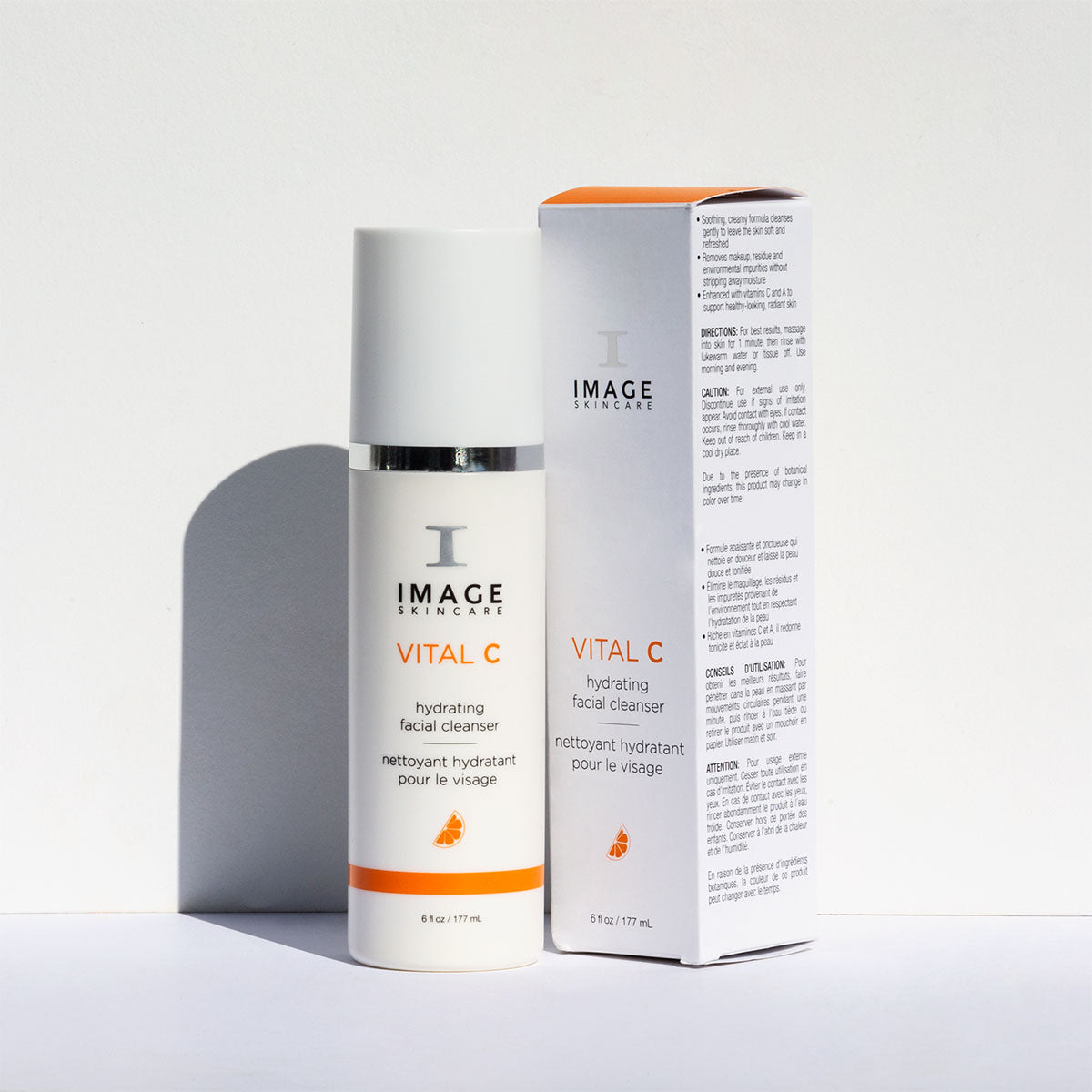
Its current collections include:
- VITAL C
- AGELESS
- DAILY PREVENTION
- ILUMA
- IMAGE MD
- CLEAR CELL
- BIOME+
- I MASK
- I BEAUTY
Different collections are designed around different skincare needs, making product selection more targeted than simply choosing whatever happens to be trending.
When to Ask a Professional
Skincare advice online has limits.
If you’re dealing with persistent acne, significant irritation, unexplained skin changes or another ongoing concern, consider speaking with a dermatologist or other qualified professional.
Professional guidance can also be helpful when you’re trying to combine multiple active ingredients.
IMAGE Skincare also works with licensed estheticians and provides professional skincare consultation options.
The Skincare Layering Mistakes to Avoid
Try to avoid:
- Introducing several strong active ingredients simultaneously.
- Assuming more product creates faster results.
- Exfoliating excessively.
- Skipping sunscreen while using photosensitizing products.
- Choosing products only because they’re trending.
- Ignoring irritation.
- Using products without checking their directions.
- Building a routine so complicated that you can’t maintain it.
Good skincare doesn’t need to feel like chemistry homework.
Your Simple Skincare Layering Cheat Sheet
Morning
- Cleanser
- Targeted serum
- Eye cream optional
- Moisturizer
- Broad spectrum SPF
- Makeup
Evening
- Makeup/SPF removal if needed
- Cleanser
- Targeted treatment
- Eye cream optional
- Moisturizer or night cream
Additional exfoliants, masks and treatments can be incorporated according to their instructions and your skin’s needs.
Final Thoughts
The best skincare routine isn’t necessarily the one with the most products.
It’s the one that makes sense for your skin and that you can follow consistently.
Cleanse first.
Apply targeted treatments thoughtfully.
Support hydration.
Protect your skin from the sun during the day.
Keep stronger active ingredients appropriate for your skin and introduce them carefully.
IMAGE Skincare’s Core Four philosophy follows the same straightforward principle: cleanse, treat, protect and repair.
Once you understand those foundations, skincare layering becomes much less confusing and your bathroom shelf doesn’t need 20 products to create a thoughtful routine.