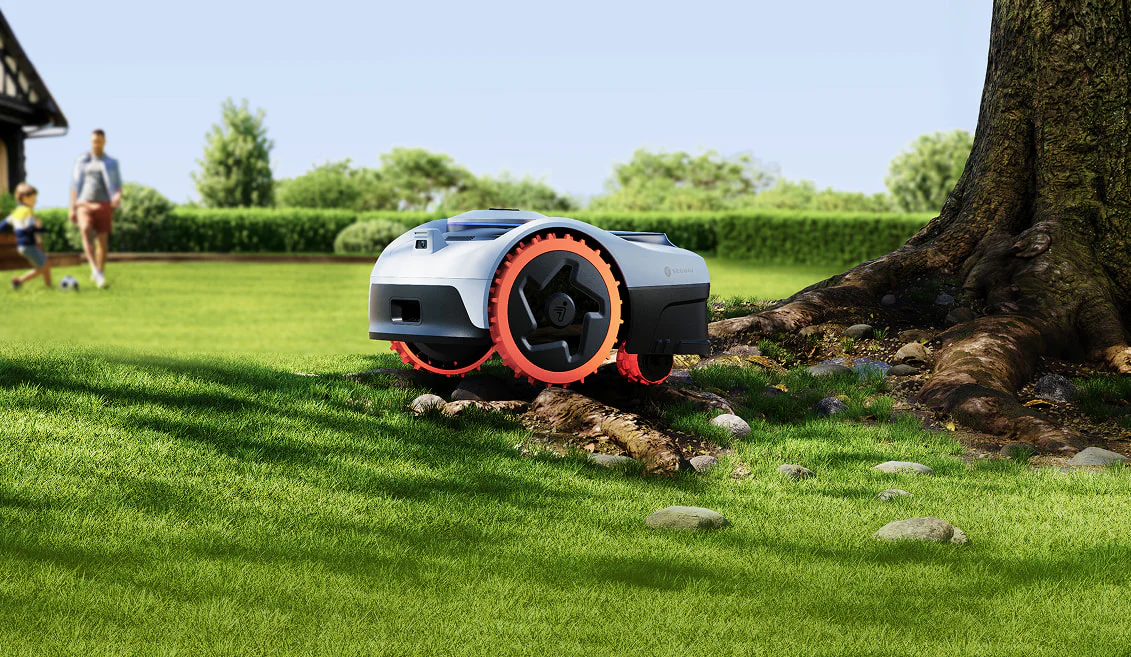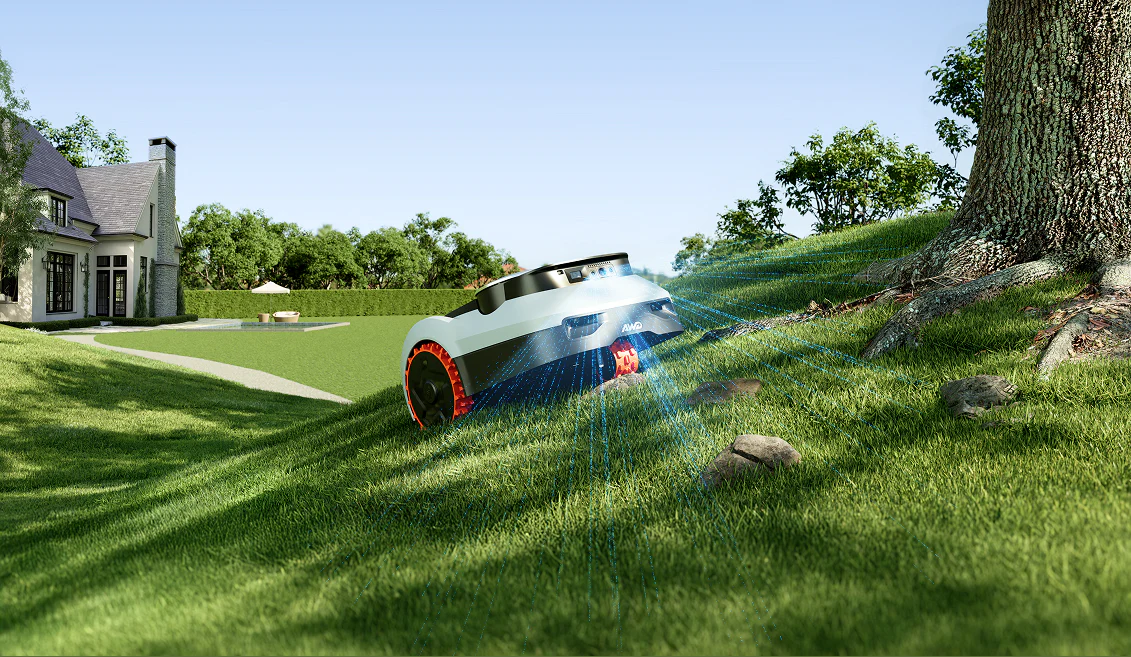
Maintaining a beautiful lawn can become challenging when your garden includes hills, uneven surfaces or difficult corners.
Traditional mowing may require additional effort, especially when working around slopes and obstacles.
Robotic lawn mowers offer an alternative by automatically maintaining grass according to programmed schedules.
However, not every robotic mower is designed for the same terrain.
Understanding the features that matter can help you choose a suitable machine for your garden.
Why Sloped Gardens Need Special Equipment
Slopes introduce challenges that are less noticeable on flat lawns.
A mower needs sufficient traction to move uphill, maintain stability and navigate downhill safely.
Wet grass, uneven soil and changing ground conditions can make movement more difficult.
Choosing a robotic mower with an appropriate slope rating is therefore essential.
Understand Slope Ratings
Manufacturers usually describe climbing capability using percentages or degrees.
These measurements indicate the maximum slope a machine is designed to handle under specified conditions.
For example, a 45 percent gradient is approximately 24 degrees.
Always compare your garden’s steepest areas with the manufacturer’s recommendations.
Remember that wet conditions, obstacles and surface irregularities can affect real world performance.
Look for Good Traction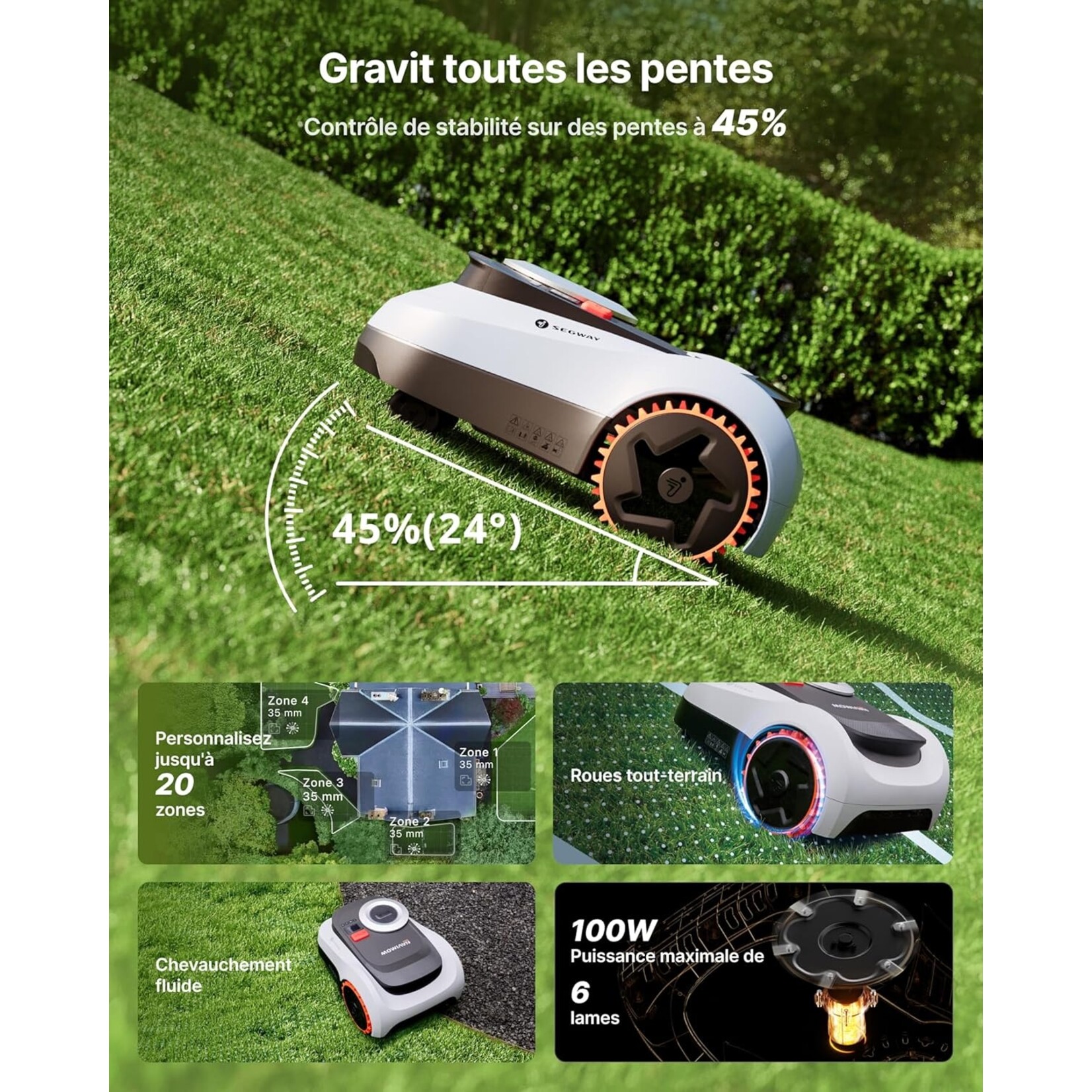
Traction is particularly important on hills.
Robotic lawn mowers designed for difficult terrain may feature specialised wheels, improved weight distribution or additional drive systems.
Some models use all wheel drive technology to improve movement across slopes.
These features can help a mower maintain control on challenging ground.
However, no mower should be operated beyond its stated limits.
Consider Uneven Ground
Sloped gardens are not always smooth.
Tree roots, small holes, raised edges and changing soil levels can create additional obstacles.
Look for information about ground clearance and the maximum obstacle height a mower can handle.
Suspension systems and adaptable cutting mechanisms may also help certain models navigate irregular surfaces.
Choose a Suitable Navigation System
Navigation technology influences how robotic mowers move around a garden.
Traditional systems may require physical boundary wires.
Newer wireless models can use satellite positioning, cameras or LiDAR sensors to identify mowing areas.
Some systems combine several technologies for improved positioning.
The most suitable option depends on your garden’s layout, tree coverage and surrounding structures.
Check Obstacle Detection
 Gardens contain more than grass.
Furniture, flower beds, trees and gardening equipment can interrupt mowing routes.
Robotic mowers with obstacle detection systems can identify certain objects and adjust their movement.
However, these systems have limitations.
Always remove small objects and check that children and pets are away from the mowing area before operation.
Think About Lawn Size
A mower’s recommended coverage area is another important consideration.
Smaller gardens may require compact models, while larger lawns need equipment with greater coverage capabilities.
Slopes and complicated layouts can also influence how efficiently a mower completes its schedule.
Choose a model with enough capacity for your actual mowing area.
Explore Navimow Robotic Lawn Mowers
Segway Navimow offers robotic lawn mowers designed for different garden sizes and terrain conditions.
The Navimow i2 AWD uses a three wheel drive system and supports slopes up to 45 percent.
For more demanding terrain, the Navimow i2 LiDAR Pro combines LiDAR, network RTK and camera based navigation, with a stated slope capability of up to 55 percent.
The Navimow X4 Series is designed for larger and more challenging gardens, offering four wheel drive and a maximum stated slope capability of 84 percent.
These models also include obstacle detection and wireless navigation technologies.
Actual performance depends on garden conditions and correct setup.
Consider Installation and Maintenance
Before purchasing, review the installation requirements.
Check whether the mower needs a charging station, network coverage or other positioning equipment.
Inspect the lawn for holes, loose objects and potentially hazardous edges.
Follow the manufacturer’s instructions for cleaning, blade replacement and battery storage.
Regular maintenance helps keep the equipment ready for use.

Final Thoughts
Choosing a robotic lawn mower for a sloped garden requires more than comparing lawn coverage.
Traction, slope capability, navigation and obstacle detection all influence suitability.
Navimow offers several robotic mower options designed for different levels of terrain complexity.
By understanding your garden’s layout and comparing the manufacturer’s specifications, you can make a more informed choice for convenient lawn maintenance.